
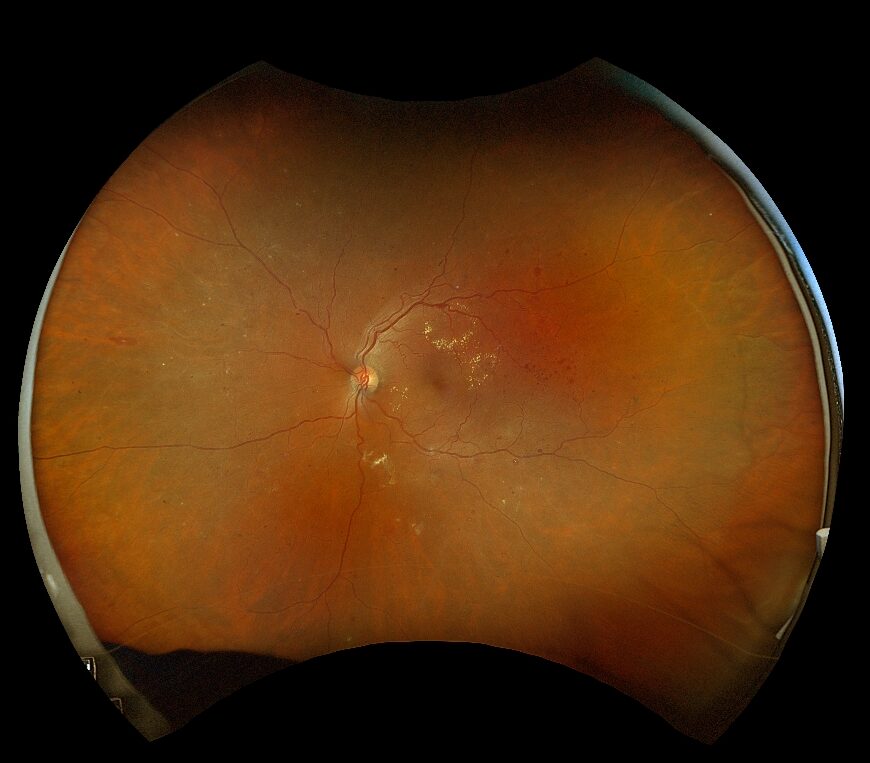
If you have diabetes, you need a dilated eye exam at least once a year, even if your vision seems fine. Diabetic retinopathy often causes no symptoms until it is advanced, and treatment works best when it starts early.
What is diabetic retinopathy?
Over time, high blood sugar damages the small blood vessels of the retina. These vessels can leak fluid or blood, or close off and starve the retina of oxygen. High blood pressure and cholesterol add to the damage.
Stages of diabetic retinopathy
- Non-proliferative diabetic retinopathy (NPDR): blood vessels weaken, leak, or bleed. Vision is often normal at this stage.
- Proliferative diabetic retinopathy (PDR): abnormal new blood vessels grow. They can bleed into the eye or pull on the retina and cause a retinal detachment.
- Diabetic macular edema (DME): fluid in the macula, the center of vision. DME can occur at any stage and is the most common cause of vision loss from diabetes.
What symptoms might I notice?
Early diabetic retinopathy usually has no symptoms. As it progresses, patients may notice:
- Blurry or fluctuating vision
- Difficulty reading
- New floaters or dark spots
- Sudden vision loss
How is diabetic retinopathy treated?
Blood sugar control
Good blood sugar control is the foundation of treatment and slows the progression of retinopathy.
Blood pressure control
Controlling blood pressure also slows progression. We work alongside your primary care doctor or endocrinologist.
Anti-VEGF injections
Injections reduce leakage and abnormal blood vessel growth. They are the first-line treatment for diabetic macular edema and are also used for advanced retinopathy.
Laser treatment
Panretinal photocoagulation (PRP) treats proliferative diabetic retinopathy and lowers the risk of severe vision loss.
What the research shows
>50%
Lower risk of severe vision loss with PRP laser in high-risk proliferative retinopathy.
Diabetic Retinopathy Study
~2 lines
Average vision gain in one year with anti-VEGF injections for diabetic macular edema, and close to 4 lines when starting vision was worse.
DRCR Retina Network Protocol T
34% vs 57%
Four-year risk of serious complications in severe NPDR with early injections vs. close monitoring. Final vision was similar in both groups.
DRCR Retina Network Protocol W
This is why careful monitoring is a reasonable approach for many patients, and why keeping your follow-up appointments matters.
What should I do?
Get a dilated eye exam every year. Keep your blood sugar and blood pressure under control, and keep every follow-up visit, even when your vision feels normal.
Please contact us promptly if you notice sudden vision loss, a shower of new floaters, or a curtain or shadow over your vision.